
Rego Park Truck Crash Attorney
A collision with a commercial vehicle can leave you dealing with serious injuries, and a Rego Park truck crash attorney can help you understand what needs to happen next. The Boyko Law Firm helps people injured in truck crashes throughout Rego Park get connected with appropriate medical care while we investigate what happenedThis involves identifying the parties that may be involved and pursue compensation for the harm the collision caused.
What Sets Our Rego Park Truck Crash Attorney Apart in Numbers
The Truck Was Beside You Until Suddenly It Was Coming Into Your Car
You Were Just Following Traffic
You were moving with traffic through Rego Park when you came alongside a box truck parked outside a deli making a delivery. Nothing about it seemed unusual.
Trucks stop along 108th Street near 63rd Drive all the time, and you had no reason to think this one was about to move.
Then the truck began pulling away from the curb.
There was no gradual merge and barely enough time to react. The front of the truck came directly into the passenger side of your car, striking near the middle of the vehicle and shoving you across the road.
For a moment, you were no longer controlling where the car was going.
You crossed toward the opposing lane before finally coming to a stop. Thankfully, there was no vehicle coming the other way.
A Side Impact From a Truck Is Not a Fender Bender
A box truck can be substantially heavier than the car beside it. When that weight strikes the side of a smaller vehicle, it can push the car off its path while placing significant force on the part of the vehicle closest to the people inside.
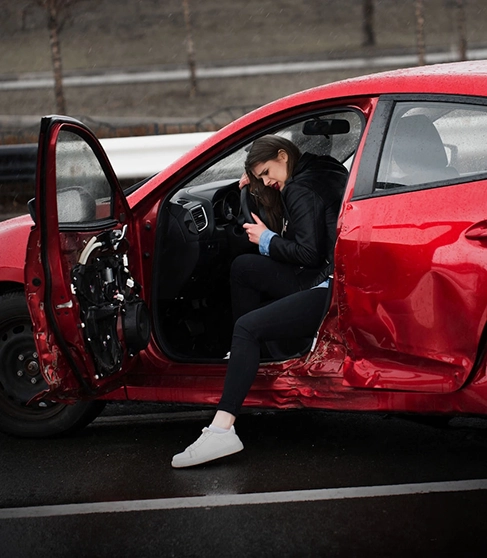

Your Car Wasn’t Going Anywhere
Once you stepped out, the damage made the next decision fairly obvious.
The side of the car had taken the truck’s impact. Maybe the doors would not open properly. Maybe a wheel no longer sat straight or pieces of the body were rubbing against the tire. Whatever you were looking at, driving the car home no longer felt safe.
So you waited for the tow truck.
It may not be until you get home that your attention finally shifts away from the accident scene.
Then your lower back begins tightening.
What starts as soreness can become much harder to ignore as you try to sit down, stand back up, or find a comfortable position. The force that moved your car sideways now feels much more real because you are beginning to feel what the collision did to you.
No need to Figure Out the Trucking Company
If a commercial truck caused your crash, the Boyko Law Firm can help you get connected with appropriate care while determining who operated the truck and who owned it. A Rego Park truck crash attorney can begin sorting through those questions while you focus on your recovery.
Start With Where the Truck Crash Has You Right Now

The Truck Crash Just Happened
You were just involved in a crash with a commercial truck and are still trying to figure out whether you’re hurt, what information matters, and what may be lost once the scene clears.
My Pain Started After I Got Home
You left the truck accident without collecting all of the commercial vehicle’s identifying information and are now trying to figure out whether the truck and carrier can still be traced from what you do have.
My Injuries Are Getting Harder to Ignore
Your symptoms have become harder to ignore after the truck crash, and you’re now trying to understand if you need medical care and what steps matter as the injury develops.
The Trucking Company or Its Insurer Is Contacting Me
The trucking company or one of the insurers is already contacting you, and you’re trying to understand what they want and which requests actually need your attention.
I Keep Seeing Different Company Names Connected to the Truck
You’re seeing different company names tied to the truck and are trying to understand which business was actually connected to the vehicle, driver, or trip when the crash happened.
If your truck crash just happened, focus first on getting to safety, checking for injuries, and preserving scene information you can without putting yourself at risk.
What May Be Happening
You may still be standing near the scene trying to understand how a normal drive turned into a collision with a commercial truck.
Your car may be badly damaged. Traffic may still be moving around you. Police and emergency responders may be arriving while the truck driver is speaking with someone from the company.
In those first few minutes, it is easy to focus on the size of the truck, the damage to your vehicle, or whether you can get home.
The more immediate question is simpler:
Am I hurt, and what information may disappear once everyone leaves?
What May Matter Right Now
If you can safely do so, focus on the basics:
- Move away from active traffic and get emergency medical help when needed
- Report the collision and make sure your injuries are mentioned
- Photograph the truck, your vehicle, and the surrounding scene
- Save the company name, license plate, and any USDOT or unit number visible on the truck
- Note whether the tractor and trailer display different names or identifying numbers
Commercial trucks can carry identifying information that an ordinary passenger vehicle does not. Federal rules require many interstate commercial motor vehicles to display the operating carrier's name and USDOT number, making those markings useful when they are visible.
What To Avoid
Don’t put yourself back in danger trying to photograph every part of the truck. If there is anything that makes the accident area unsafe, stay away from it.
And if you didn’t clearly see something, don’t fill in the blanks.
How The Boyko Law Firm May Help
A Rego Park truck crash attorney can start with what you were able to preserve and help identify what deserves immediate attention while the collision is still recent.
The Boyko Law Firm can also help you understand the first medical and insurance steps while you concentrate on getting yourself evaluated.
If you left the truck crash without collecting every identifying detail make sure to preserve what evidence you do have because even partial markings may still help identify the truck and carrier.
What May Be Happening
The scene moved faster than you expected.
Maybe an ambulance took you away. Maybe your car had to be towed. You may have taken a few photographs but never thought to look for a USDOT number, company name, truck number, or information from the trailer.
Now the truck is gone.
You know where the crash happened and roughly when, but you are worried that you missed your chance to identify the commercial vehicle involved.
What May Matter Right Now
Start with the information you still have rather than trying to recreate what you missed:
- Preserve every photograph or video from the scene
- Keep the police information and anything exchanged with the truck driver
- Write down any part of the company name, logo, plate, or truck number you remember
- Save dashcam footage before it is overwritten
- Record the exact location and approximate time of the collision
A partial company name or USDOT number can sometimes provide a useful starting point because FMCSA maintains public carrier identification information that can be searched by carrier name and USDOT number.
What To Avoid
Don’t assume the case cannot move forward because you failed to photograph every identifier.
At the same time, don’t guess at a company name because a logo looked familiar or choose a truck from an online search simply because it appears similar.
What you actually know is more useful than a confident guess.
How The Boyko Law Firm May Help
The Boyko Law Firm can begin with the police information, photographs, location, and whatever identifying details remain.
Our managing attorney can then work to determine which truck and carrier need to be investigated without expecting you to solve that problem yourself.
If pain or stiffness becomes worse after a truck crash you should get evaluated based on how you feel now, document what has changed, and not let uncertainty about insurance delay appropriate medical care.
What May Be Happening
You made it through the scene and thought you had escaped with soreness.
Then your body began telling you something different.
Getting out of bed may feel harder the next morning. Turning your neck may suddenly hurt. Sitting at work may become uncomfortable. An area that only felt stiff after the collision may now be painful enough that you are reconsidering whether you need medical care.
The damage to the vehicles may have been obvious immediately, but what happened to your body can take longer to understand, especially with adrenaline present.
What May Matter Right Now
Pay attention to what has changed and respond to how you actually feel now:
- Get medically evaluated based on your current symptoms
- Explain that the symptoms developed or became worse after the truck crash
- Describe what movements or activities have become difficult
- Keep your medical paperwork, referrals, and work restrictions together
- Make sure the appropriate No Fault claim is addressed
The correct No Fault insurer depends on how you were involved in the collision, but New York generally requires written notice within 30 days unless there is clear and reasonable justification for a late filing.
What To Avoid
Don’t decide that an injury cannot be significant simply because you walked away from the scene.
You also shouldn’t exaggerate what changed or try to diagnose yourself. Explain what you are actually experiencing and let the medical professionals evaluate it.
Most importantly, don’t let uncertainty about insurance become the reason you postpone medically appropriate care.
How The Boyko Law Firm May Help
A Rego Park truck crash attorney can listen to how your condition developed, help connect you with appropriate medical care, and begin organizing the injury claim around what actually changed after the collision.
The Boyko Law Firm can also help address the applicable insurance process while your attention stays on recovery.
As your medical, work, and daily life effects become clearer, a personal injury lawyer can evaluate how those losses should be documented and pursued as part of the claim.
If someone connected to the truck starts contacting you after the crashmake sure to keep track of who they represent, what they’re asking for, and avoid giving detailed statements or signing anything until you speak with an injury attorney.
What May Be Happening
You may barely have had time to process the collision before someone connected with the truck begins calling.
It could be an insurance adjuster. It could be someone representing the carrier. Meanwhile, your own insurance company may be contacting you about a completely different part of the accident.
That can make several conversations about one collision feel like a single claim when they are not necessarily the same thing.
What May Matter Right Now
Before responding in detail, establish who you are actually dealing with:
- Get the caller's name, company, and contact information
- Ask which company or vehicle they represent
- Save any claim number and written correspondence
- Make note of what they are requesting from you
- Keep copies of forms, authorizations, or other documents they send
You don’t need to fully understand every insurance relationship before keeping a clear record of who is asking for what.
What To Avoid
Don’t guess about the collision simply because someone asks for an immediate explanation.
You also don’t need to give a detailed recorded account or sign an authorization you don’t understand during an unexpected phone call.
At the same time, don’t ignore formal insurance requests or documents that may require a response. The important first step is understanding who sent them and what they relate to.
How The Boyko Law Firm May Help
A truck accident lawyer in Rego Park can determine who is contacting you, which part of the collision they are addressing, and what actually requires your attention.
The Boyko Law Firm can communicate with the appropriate parties so you are not trying to manage several competing requests while recovering from the crash.
If several company names appear after a truck crash, save all of them. The carrier, vehicle owner, trailer owner, and driver’s employer may all have different roles that need to be sorted out before responsibility is clear.
What May Be Happening
At the scene, you may have assumed the company name on the truck told you everything you needed to know.
Then you look at the police information and see another name.
The tractor may display one company while the trailer carries another. An insurance letter may reference a business you have never heard of. The truck driver may work for one company while the vehicle itself is owned or leased by someone else.
Now you are wondering which company actually matters.
That is a reasonable question in a commercial truck case.
What May Matter Right Now
For now, preserve the different names rather than trying to decide which one should be responsible:
- Keep photographs showing names and numbers on both the tractor and trailer
- Save the police report and insurance correspondence
- Keep any driver, carrier, or vehicle information exchanged after the crash
- Make note of which company appears on each document you receive
FMCSA itself cautions that the name or number seen on the side of a truck does not always identify the motor carrier responsible for a particular load. Vehicle registration can identify an owner or registrant without necessarily identifying the responsible carrier either.
What To Avoid
Don’t assume that every business name connected with the truck is automatically responsible.
But don’t assume the opposite either. The motor carrier, vehicle owner, trailer owner, or employer may have different relationships to the trip.
Those relationships need to be understood before conclusions are made.
How The Boyko Law Firm May Help
A Rego Park truck crash attorney can take the names and identifying information you have and begin sorting out the commercial relationships behind the vehicle.
The Boyko Law Firm can determine which people and companies warrant investigation while leaving the deeper responsibility analysis for the claim itself.
You were just involved in a crash with a commercial truck and are still trying to figure out whether you’re hurt, what information matters, and what may be lost once the scene clears.
You left the truck accident without collecting all of the commercial vehicle’s identifying information and are now trying to figure out whether the truck and carrier can still be traced from what you do have.
Your symptoms have become harder to ignore after the truck crash, and you’re now trying to understand whether you need medical care and what steps matter as the injury develops.
The trucking company or one of the insurers is already contacting you, and you’re trying to understand what they want and which requests actually need your attention.
You’re seeing different company names tied to the truck and are trying to understand which business was actually connected to the vehicle, driver, or trip when the crash happened.
The First Steps After a Truck Crash That Matter Later

Get Yourself Out of Immediate Danger
Before worrying about the truck or your vehicle, check yourself and your passengers for injuries. A truck collision can also leave vehicles, debris, or cargo spread across active traffic, so pay attention to what is happening around you before getting out.
If you can move safely, get away from passing traffic. Stay clear of leaking fluids, fallen cargo, or anything else around the truck that appears dangerous.
Call for Police and Medical Help
If you may be injured, call 911 and give the dispatcher your location. Tell responders what happened and describe any pain, dizziness, bleeding, or other symptoms you notice.
New York requires police to be notified immediately when a crash causes an injury or death. You don’t need to determine how serious an injury is before asking for medical help.
Identify the Truck Before It Leaves
A commercial truck may carry information that helps distinguish the vehicle and company involved. If you can safely do so, photograph the truck before it is moved or driven away.
Try to capture the company name displayed on the cab, any visible USDOT number, and the tractor and trailer license plates.
You do not need to understand what every number means at the scene. Preserve what is visible and let the details be sorted out later.
Preserve What Happened at the Scene
Once traffic starts moving again, the scene may look very different. Photograph your vehicle, the visible damage, and the wider area where the collision occurred.
Ask anyone who saw the crash for their name and contact information before they leave.
You don’t need to figure out why the truck crashed while you are standing on the roadside. Focus on preserving what you can actually see and remember.
Get Evaluated and Explain What Changed
You may be able to walk away from the truck crash and still develop pain or other symptoms afterward. Get medical care that is appropriate for how you feel and explain that your symptoms followed the collision.
Tell the provider what hurts, when you first noticed it, and what normal activities have become harder since the crash.
Don’t try to diagnose the injury yourself or minimize something simply because it was not obvious at the scene.
Speak With a Rego Park Truck Crash Attorney
Once your immediate safety and medical needs are addressed, a Rego Park truck crash attorney can help you understand what should happen next.
Bring whatever information you were able to preserve.
The Boyko Law Firm can identify any issues that need early attention and begin handling the legal and insurance side while you focus on recovery.
A Truck Crash Claim Can Reach Beyond the Driver

Identify the People and Businesses Behind the Truck
The company name on the truck may only tell part of the story. The driver may work for one business while the vehicle is owned, leased, or insured by another. In larger trucking operations, additional companies can also become connected to the trip.
The Boyko Law Firm can sort through those relationships and determine which people, businesses, and insurance policies actually need to be part of the claim.
This may include:
- Identifying the business the driver was working for
- Determining who owned or leased the truck
- Identifying the insurance connected to the driver, vehicle, or business
- Opening the appropriate claims and preparing required notices
- Tracking deadlines that apply to the parties involved

Preserve the Information the Companies Control
Some of the most useful information after a truck crash may never have been available to you at the scene.
Depending on the truck and company involved, that information may include records and video only they have access to. To make it even more difficult, records may only be kept for limited periods, which is one reason figuring out what needs to be preserved can matter early.
Our team can take steps to preserve relevant information, obtain records through the claim or litigation process, and use them to understand what was happening before the collision.
This may include:
- Preserving relevant company records before they’re deleted or overwritten
- Obtaining dispatch, driver, vehicle, and electronic records when applicable
- Reviewing inspection and maintenance history when vehicle condition may have contributed
- Securing available company video or onboard information
- Bringing in qualified specialists when the collision requires technical analysis

Build the Full Claim and Deal With the Commercial Insurers
Once the companies involved and the circumstances of the crash are understood, the next job is turning that information into a claim that reflects what the collision actually caused.
Our managing attorney can determine what coverage applies, evaluate the injuries and losses, and present the claim to the appropriate parties.
If the companies or insurers involved won’t reasonably account for the evidence, the Boyko Law Firm can move the case forward through litigation when necessary.
This may include:
- Identifying the insurance policies that may apply
- Evaluating the full effect of the injuries and financial losses
- Preparing and presenting the claim to the appropriate insurers
- Responding to disputes involving responsibility or the extent of the injuries
- Negotiating based on the developed evidence
- Filing suit and preparing the case for trial when necessary



Three Questions Can Help Clarify What Comes Next
A truck crash claim depends on more than who caused the collision. Answer the three questions below to see whether speaking with a Rego Park truck crash attorney could be a sensible next step.
Were you injured in the truck crash?
This may include pain, physical injuries, symptoms that appeared later, or the worsening of an existing condition.
YESNOWere you responsible for the incident?
Consider whether another driver, property owner, business, employer, or other party may have contributed.
YESNOWhat Clients Say About Working With Our Firm
I had a great experience working with this lawyer. She is honest, hardworking, and truly dedicated to her clients. She answered all of my questions thoroughly and patiently explained everything that needed to be done to achieve the best possible outcome. Her professionalism and attention to detail gave me confidence throughout the entire process. I would highly recommend her to anyone looking for a knowledgeable and trustworthy lawyer.

My experience with Boyko Law Firm was exceptional from beginning to end. From the first consultation, their team was attentive, professional, and committed to handling my case with care and diligence. Throughout the entire process, they maintained clear communication, took the time to address all of my concerns, and ensured I understood every step along the way. Their thoroughness, professionalism, and dedication gave me confidence during a very challenging time. What impressed me most was the level of personal attention and effort they invested in my case...
I had an excellent experience with Boyco Law Firm. From the very beginning, their team was professional, responsive, and genuinely committed to helping me through my situation. They took the time to explain every step clearly, answered all my questions, and made what could have been a stressful process feel much more manageable.
What stood out most was their attention to detail and dedication to achieving the best possible outcome. I always felt like my case truly mattered to them, and their expertise gave me a lot of confidence throughout the entire process...
Truck Crashes Can Happen in Very Different Ways
A truck approaching stopped traffic creates a different danger than one turning through an intersection or backing into a delivery space. Understanding how the collision happened can help explain what deserves a closer look afterward.
A Rego Park truck crash attorney can examine the circumstances surrounding the crash rather than treating every commercial vehicle collision the same way.
Rear End Crashes in Slowing Traffic
A truck needs enough room to react when traffic ahead suddenly slows or stops. That can become especially important in areas where traffic speed changes quickly.
A rear end truck crash may happen when the truck reaches stopped traffic too quickly, follows another vehicle too closely, or doesn't have enough distance left to stop safely.
FMCSA research has consistently identified rear end collisions as a significant truck crash pattern and specifically warns commercial drivers about the additional space needed for safe braking.
Common situations can include:
- Traffic stopping unexpectedly ahead of the truck
- A truck approaching an intersection or traffic queue too quickly
- Several vehicles being pushed together in a chain reaction
- A truck failing to leave enough space behind the vehicle ahead
Turning Crashes at Intersections
A truck may need more room to complete a turn than the smaller vehicles around it. At the same time, the size and height of the vehicle can make people or cars near parts of the truck harder for the driver to see.
That combination can create problems when a truck turns through an intersection, crosses another lane, or moves through an area shared with pedestrians and cyclists. If the truck struck you while you were walking, a hit by car injury attorney can focus more closely on pedestrian No Fault coverage, right of way, and the evidence showing how the truck approached the intersection.
NYC DOT places particular emphasis on truck visibility and safe turning because these movements create significant risks on crowded city streets.
Common situations can include:
- A truck turning across the path of another vehicle
- A wide turn moving into an adjacent lane
- A pedestrian or cyclist being caught alongside a turning truck
- A driver failing to see someone near the front or side of the vehicle
Lane Changes and Sideswipe Crashes
A passenger vehicle can be difficult to see from certain areas around a larger truck.
A sideswipe may begin with direct contact, or the truck's movement may force another driver to brake, swerve, or collide with something else while trying to avoid it.
FMCSA identifies inadequate observation as an important factor in large truck crashes and specifically discusses the large areas around commercial vehicles where other road users may be difficult to see.
Common situations can include:
- A truck moving into an occupied lane
- A truck merging while another vehicle is alongside it
- A passenger vehicle being squeezed toward a curb or barrier
- An evasive maneuver causing a second collision
Backing and Delivery Area Crashes
Not every truck crash begins while the truck is moving normally through traffic.
Box trucks, moving trucks, and other commercial vehicles may repeatedly enter areas designated for deliveries to be completed. Those movements can create danger for drivers, pedestrians, and cyclists who are close to the vehicle.
NYC DOT specifically warns truck drivers about the dangers of backing and has made visibility and reverse collision prevention a focus of its truck safety efforts.
Common situations can include:
- A delivery truck backing from a curb or loading area
- A truck pulling into traffic after making a stop
- A driver failing to see someone behind or beside the vehicle
- A commercial vehicle maneuvering through a tight street or delivery space
The Type of Crash Can Change What Matters Next
You don't need to know what category your accident fits into before speaking with the Boyko Law Firm. Tell our team what the truck was doing and what happened to you. We can then help determine which parts of the collision deserve a closer look.
Tell Us How Your Truck Crash HappenedResponsibility Can Reach Far Beyond the Driver
A truck crash can involve multiple layers that aren’t exactly visible from the roadway. The driver may be working for one business, the truck may be owned or leased by another, and someone else may have loaded the cargo or maintained the vehicle. A Rego Park truck crash attorney can sort out how those roles fit together and determine which people and businesses actually played a part in what happened.
The Truck Driver
The investigation usually begins with the person behind the wheel.
A truck driver may cause a collision by following too closely, making an unsafe turn or lane change, or failing to adjust to traffic and road conditions. Depending on the type of truck and trip, additional safety rules may also govern how the vehicle is operated.
The driver’s conduct matters, but it doesn’t necessarily answer the larger question of who else may share responsibility.
The Company the Driver Was Working For
The business behind the trip is important for reasons that go beyond simply employing the driver. Depending on the operation, questions may arise about driver supervision, scheduling, safety practices, vehicle use, or whether the company expected the driver to operate in a way that created unnecessary risk.
For commercial operations covered by federal motor carrier rules, the carrier also has responsibilities for requiring drivers to follow applicable safety requirements.
The Owner or Lessor of the Truck
The business operating the truck may not be the business that owns it.
A local company might lease a box truck or commercial van. In a larger trucking operation, the tractor and trailer can even belong to different owners. Those arrangements can affect which records and insurance policies need to be examined.
New York generally makes vehicle ownership important when someone negligently operates a vehicle with the owner’s permission.
The Company That Loaded or Secured the Cargo
Cargo can contribute to a crash even when nothing visibly falls from the truck.
A poorly distributed or shifting load can affect how a truck handles. Cargo that isn’t properly secured can move or fall onto the roadway.
Federal rules also place cargo securement responsibilities on covered drivers and motor carriers, so the fact that another company loaded the truck doesn’t automatically remove responsibility from the trucking side.

The Company Responsible for Maintenance or Repairs
Sometimes the problem begins with the truck rather than a decision the driver makes at the moment. If a mechanical problem contributed to the collision, the truck’s maintenance history can become important.
The company operating the truck may have handled that work itself, or repairs may have been performed by an outside shop or service provider. If someone performed defective work or ignored a known problem, their role may need a closer look.
A Truck or Parts Manufacturer
Most truck crashes aren’t caused by a defective product. But when the evidence points to a failure inside the vehicle, the investigation may need to go beyond the driver and trucking company.
A defective tire, brake component, or cargo securement device can potentially change how the crash is understood.
The question becomes whether the component failed because of poor maintenance, improper use, or a problem with the product itself.
The Claim Should Reflect the Full Cost of the Truck Crash
The damage from a truck crash can extend far beyond what happened to the vehicles and many times leads to compensation for the medical impact and lost income.
What the Claim Has to Capture
Hospital care, rehabilitation, and treatment still ahead
Paychecks missed while your injuries keep you away from work
Changes in the type or amount of work you may be able to perform
Physical restrictions affecting movement, driving, or sleep
Help, transportation, or other needs created during recovery
Long range changes to your independence, routines, and plans

What Compensation May Address
A serious truck crash can affect far more than the treatment you need today. The claim should account for the ways the injuries may continue changing your health, independence, and everyday life.
What Does Not Decide What a Truck Claim Is Worth
The fact that a commercial company has insurance
How dramatic the vehicle damage appears in photographs
The amount another truck accident case settled for
An insurer’s first estimate of what the injuries are worth
How large the truck looked at the scene
The number of businesses eventually connected to the truck
What Compensation Is Not
Money can’t undo an injury or restore the time and independence the crash may have taken from you. The purpose of the claim is to financially account for the losses the evidence can support, not to create a windfall.
Your Case Stays With the Attorney You Hired Every Step


Nataliya has spent more than two decades working on legal matters, with years of hands-on experience helping develop personal injury cases through insurance claims, litigation, and trial preparation. Before becoming an attorney herself, she worked alongside lawyers and injured clients on the evidence and case details that often determine how a claim develops.
That background matters in a truck crash because the work can extend beyond what happened between two drivers. Different businesses, insurance policies, vehicle records, and company information may all need to be sorted out while the medical picture is still developing. Nataliya can handle those moving pieces while keeping the claim grounded in what the collision actually did to you.
Through her personal injury work as an attorney, Nataliya has contributed to cases that recovered more than $154 million for injured clients.
At the Boyko Law Firm, your case doesn’t disappear into a larger team after the first call. Nataliya remains personally involved, helps connect you with appropriate care, and stays with the matter as it moves toward resolution.
For someone looking for a Rego Park truck crash attorney, that means you speak directly with the attorney responsible for understanding your case and moving it forward.
The Same Principles Guide Every Case We Accept
These four principles guide how Boyko Law Firm chooses cases, works with clients, and stays involved from the first conversation through the final resolution.

Direct Access to Your Attorney
You speak directly with the attorney handling your truck accident claim. Questions about medical care, trucking companies, insurance, or what happens next aren’t passed through layers of staff.

Guidance Through Each Decision
Truck crashes can involve several companies, insurers, and sources of evidence at the same time. Our attorney explains what needs attention, what information may matter, and how each decision can affect the direction of your claim.


A Strategy Built Around Your Crash
A commercial truck collision can involve more than the driver behind the wheel. Your claim is developed around how the crash happened, which companies were connected to the truck, what evidence can be preserved, and how your injuries have affected your life.

Communication as the Claim Moves Forward
You shouldn’t be left wondering what was found or who has responded. Our firm keeps you informed as the truck and carrier are investigated, records are gathered, treatment continues, and the claim progresses.



Clear Answers for What Comes After a Truck Crash
These answers cover what injured people in Rego Park commonly want to understand regarding their truck accident that will help make the next steps clearer.
Fill Out Our Form To Schedule A Consult

Does it matter if I was hit by a box truck, delivery truck, moving truck, or tractor trailer?
Yes. The type of truck can change which businesses, insurance policies, records, and safety requirements matter after the crash.
A local delivery truck making stops around Rego Park may present a very different legal picture from a tractor trailer hauling freight across state lines. Even two vehicles that both look commercial may operate under different rules.
The important question is identifying what kind of truck was involved and what it was being used for when the collision happened. A collision involving a smaller company van or work vehicle may fit more naturally with an auto accident attorney than a claim requiring a deeper commercial trucking investigation. That gives your attorney a much better starting point than treating every truck crash like the same case.
Do federal trucking rules apply to every truck driving through Rego Park?
No. Not every commercial truck in Rego Park is governed by the same federal trucking rules.
Federal requirements can depend on factors such as the size of the vehicle, what it is carrying, and whether the commercial operation involves interstate commerce.
New York has also adopted many federal motor carrier safety standards for commercial vehicles operating within the state, but there are specific intrastate rules and exceptions.
That means a local box truck making deliveries entirely within New York shouldn’t automatically be analyzed the same way as an interstate tractor trailer.
The right question is not simply whether the vehicle was a truck. It is which safety rules actually applied to that truck and that trip.
Do commercial trucks always carry more insurance than ordinary cars?
No. A truck may carry significantly more insurance, but there is no rule that every commercial truck has a million dollar liability policy.
FMCSA’s current insurance filing requirements show how much the numbers can vary.
For certain federally regulated operations, the listed minimums include:
- $300,000 for certain smaller for hire property carriers
- $750,000 for certain larger nonhazardous property carriers
- $1 million for certain hazardous materials operations
- $5 million for specified higher risk hazardous materials operations
Which requirement applies depends on the carrier, vehicle, cargo, and type of operation.
So seeing a company logo or a USDOT number doesn’t tell you how much insurance is available. The actual policies connected to the truck and the businesses involved still need to be identified.
How does New York No Fault insurance work after a truck crash?
No Fault can generally pay qualifying medical expenses, lost earnings, and certain other economic losses without waiting to determine who caused the truck crash.
Basic New York No Fault coverage generally provides up to $50,000 per eligible person.
Where the claim is filed usually depends on how you were involved:
- If you were driving or riding in another vehicle, you generally file with the insurer covering the vehicle you occupied
- If you were a pedestrian struck by the truck, you generally file with the insurer of the truck
- If you were riding in a bus when the truck caused the collision, the claim may also involve the bus operator and city insurance which is best inspected by an injury attorney that handles bus accident cases.
- Special rules can apply when the vehicle is uninsured or can’t be identified
DFS also generally requires written notice of the No Fault claim within 30 days unless there is clear and reasonable justification for the delay.
No Fault is separate from the liability claim against the truck driver or company. You also don’t need to prove a serious injury simply to receive ordinary qualifying No Fault benefits.
What if the truck that hit me belonged to New York City or the Sanitation Department?
If the truck was owned by New York City and operated as part of City work, much shorter claim deadlines may apply.
For qualifying personal injury claims against New York City, a Notice of Claim generally must be filed within 90 days of the incident. That notice normally comes before a lawsuit against the City.
The timing can then continue quickly:
- You generally must wait at least 30 days after filing the Notice of Claim and comply with applicable hearing requirements before suing
- The lawsuit generally must be commenced within one year and 90 days of the incident
A private garbage company collecting waste in Rego Park isn’t the same thing as the New York City Department of Sanitation. Likewise, a contractor doing work for the City isn’t automatically treated exactly like the City itself.
That makes identifying who actually owned and operated the truck especially important.
Is there an average settlement for a Rego Park truck accident?
There isn’t a reliable official average that tells you what your particular truck accident claim should be worth.
Online averages usually combine cases that have very little in common. A temporary injury after a delivery truck crash shouldn’t be compared with a permanent injury that changes someone’s ability to work or live independently.
A meaningful evaluation looks more closely at:
- The nature and duration of the injuries
- How the injuries affect work and daily life
- Responsibility for the collision
- The insurance and legally responsible parties available for recovery
Even two people with similar diagnoses can have very different claims.
The better question isn’t, “What is the average truck settlement?” It is, “What did this crash actually cost me, and what can the evidence support?”
How long does a truck accident claim or lawsuit usually take?
There isn’t a standard number of months for resolving a truck accident case.
The timing depends on what needs to become clear before the claim can be responsibly evaluated. That may include how the injuries develop, how many businesses are involved, and whether a lawsuit becomes necessary.
New York courts continue to provide opportunities for settlement even after litigation has begun.
Be cautious with websites that promise a standard timeline based only on whether an injury is described as minor, moderate, or severe.
The goal should be to keep the claim moving without resolving it before enough is known about the injuries and their consequences.
Why would an insurance company offer to settle a truck crash quickly?
An early settlement offer isn’t automatically good or bad. The important question is whether enough is known about your claim before you agree to end it.
An offer may arrive while important parts of your recovery are still uncertain.
You may not yet know:
- Whether additional treatment will be necessary
- How long you will be unable to work
- Whether your limitations will improve
- Whether every relevant source of insurance has been identified
A settlement can also require a release. New York permits insurers to require a release for a settled third party claim, although the release can’t be broader than the settlement itself.
So the real question isn’t simply whether the offer came quickly.
It is: Do I understand what this payment is resolving, and do I know enough about my recovery to make that decision?
What percentage does a Rego Park truck accident lawyer take?
Many New York personal injury lawyers work on a contingency fee, which means the attorney is paid from the recovery rather than charging an attorney fee upfront.
For personal injury matters governed by the Second Department rules, which include Queens, one permitted arrangement is a fee of no more than 33 and one third percent of the recovery when the initial agreement provides for it.
Attorney fees and case expenses are different things. Expenses can include costs such as medical records, filing fees, investigations, or expert services when necessary.
Your written retainer should explain how both will be handled.
For qualifying personal injury cases, the Boyko Law Firm charges no upfront attorney fee. The attorney fee is contingent on obtaining a financial recovery.
How is fault determined in a Rego Park shopping center or parking lot crash?
For an ordinary New York negligence claim, the personal injury lawsuit generally must be commenced within three years. But that doesn’t mean every important deadline after a truck crash is three years away.
CPLR Section 214 provides the general three year limitations period for personal injury actions.
Other deadlines can arrive much sooner:
- No Fault written notice is generally due within 30 days
- No Fault medical bills generally must be submitted within 45 days
- Lost earnings claims generally must be submitted within 90 days
- A qualifying claim against New York City generally requires a Notice of Claim within 90 days
- A personal injury lawsuit against the City generally must be started within one year and 90 days
These are different deadlines for different parts of the case.
So hearing that New York gives you three years shouldn’t be understood as a reason to wait three years before figuring out which claims and notices actually apply.
Can I still recover if I was partly at fault for the truck crash?
Potentially, yes. But New York changed its comparative fault rule for many motor vehicle injury cases in 2026.
For applicable cases commenced on or after May 26, 2026, recovery is barred when the injured person’s culpable conduct is greater than the fault, or combined fault, of the people being pursued. Otherwise, the injured person’s share of responsibility can reduce the recovery.
For example:
- If you were 30 percent responsible and the parties you are pursuing were collectively 70 percent responsible, the claim wouldn’t be barred under this rule, although the recovery could be reduced
- If you were 60 percent responsible and the parties you are pursuing were collectively 40 percent responsible, the current rule can bar recovery
That is an important change from the older New York rule still described on many websites.
Making one mistake before the collision doesn’t automatically mean you have no case. How responsibility is divided now matters much more.
Does New York’s serious injury threshold apply after a truck accident?
In many truck accident cases covered by New York’s No Fault law, yes. The serious injury threshold generally matters when seeking compensation for noneconomic losses such as pain and suffering.
It isn’t required simply to receive ordinary qualifying No Fault benefits.
New York changed the serious injury definition in 2026.
The current categories include:
- Death
- Dismemberment
- Significant disfigurement
- A fracture
- Loss of a fetus
- Permanent loss of use of a body organ, member, function, or system
- Permanent consequential limitation of a body organ or member
- Significant limitation of a body function or system
The former category based on being unable to perform substantially all normal activities for 90 of the first 180 days was removed for applicable actions and proceedings commenced on or after May 26, 2026.
A fracture therefore isn’t the only way an injury can meet the threshold.
Can I have a truck accident claim if the truck never actually hit my vehicle?
Potentially, yes. Physical contact with the truck isn’t always required if its driver’s conduct caused the collision or injury and the evidence can establish that connection.
Imagine a truck moves into your lane and forces you to swerve into another vehicle or off the road. The truck may never touch your car, but its movement may still be part of what caused the crash.
New York has even addressed this in an actual truck case. In Eum v. Stephens, the injured occupants were traveling behind a roll off dump truck when one of its tires blew out. Their vehicle never struck the truck or another vehicle, but the negligence claim concerning the truck’s maintenance was allowed to continue.
A no contact case can make proof especially important.
But “the truck never touched my car” isn’t the same thing as “the truck couldn’t have caused the accident.”
What if the truck was rented or leased rather than owned by the company using it?
A rental or lease can matter because the company listed as the truck’s legal owner isn’t automatically responsible simply because its name appears on the title.
New York generally imposes responsibility on vehicle owners for negligent operation by a person using the vehicle with permission.
But federal law creates an important exception for qualifying rental and leasing businesses.
Under the Graves Amendment, a company in the business of renting or leasing vehicles generally can’t be held liable solely because it owns the rented or leased truck if the statutory requirements are satisfied and there was no negligence or criminal wrongdoing by the rental or leasing company itself.
So a rental company’s name on the registration doesn’t automatically make it responsible for the crash.
The lease changes the ownership analysis. It doesn’t make the underlying truck accident disappear.
Can a truck legally leave the designated truck route to make a Rego Park delivery?
Yes. A qualifying truck can leave New York City’s designated Truck Route Network to reach a destination that isn’t directly on the route.
That doesn’t mean the driver can use any neighborhood street simply because it is convenient.
NYC DOT says the driver should leave the designated route at the intersection nearest the destination, use the most direct route to reach it, and then return to the truck route by the most direct path.
There is also an important distinction between a vehicle that meets New York City’s definition of a truck and another type of commercial vehicle that doesn’t. The Truck Route Network rules don’t apply identically to every commercial vehicle.
So seeing a delivery truck on a Rego Park side street doesn’t automatically mean it was somewhere it wasn’t allowed to be.
The useful questions are where the truck was going, which designated route was nearby, and why the driver was using that particular street.
Tell Us About Your Truck Crash
Tell the Boyko Law Firm what happened, and Nataliya can help you understand whether the crash should be reviewed and what may need attention next.