
Family Immigration Lawyer in Rego Park
A family immigration lawyer in Rego Park, NY can help you understand the process for bringing an eligible family member to the United States or helping them pursue lawful permanent residence. The Boyko Law Firm guides families through the immigration process while giving you direct access to our managing attorney throughout your matter.
The Numbers That Put Our Family Immigration Lawyer in Rego Park in Focus
Building a Life Here Can Still Feel Incomplete When Your Family Is Somewhere Else
You Built a Life Here And You Want Your Family to Be Part of It
You may live in Rego Park with a job and friends, but you still find that someone important is still missing from it.
Maybe your spouse is living in another country while you plan your future through phone calls and video chats. Maybe your parents are getting older and you wish they could be closer.
It is not always the major moments that make the distance hardest.
Eventually, the goal becomes very simple.
You want the people you love closer.
Family Immigration Is About More Than Completing Forms
USCIS allows U.S. citizens and lawful permanent residents to petition for certain qualifying relatives, although which relationships qualify and how the process works depends on the petitioner’s status and the family relationship.
But when it is your family, the process rarely feels like just another application.
Every form and supporting document is connected to someone you are hoping to build more of your life with.
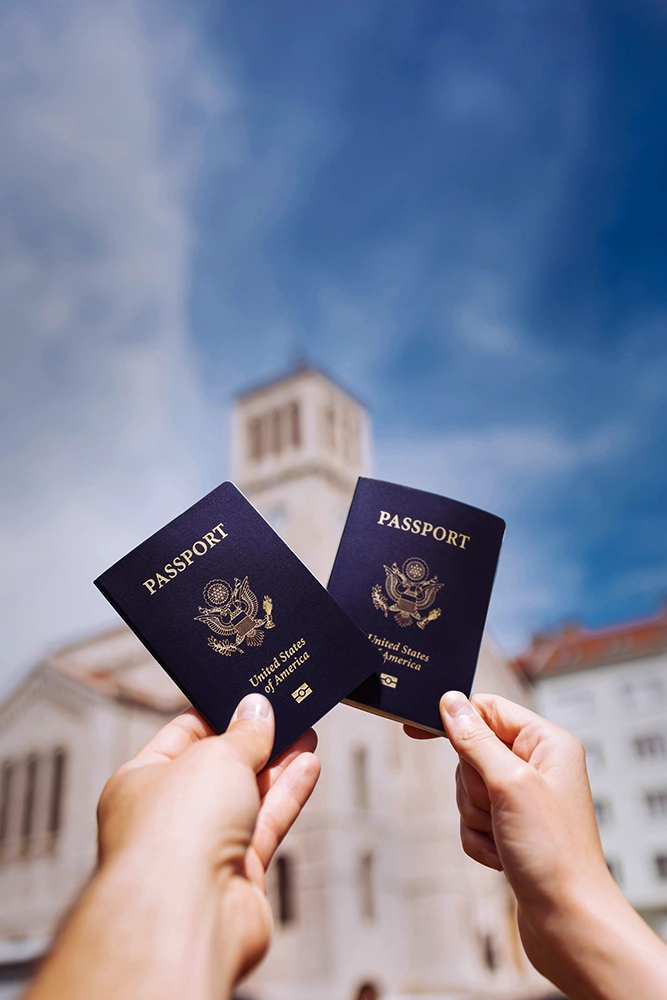

The Goal Is Is Getting to Live Like a Family Again
Imagine the things that feel complicated now becoming ordinary.
Your spouse is beside you instead of on a screen. Your parents can be there for birthdays and family dinners. Your children can grow up with more of the people you wanted around them.
That is what makes family immigration different from many other legal matters.
You Know Who You miss and We Can Help You Understand the Path to get them here.
A family immigration lawyer in Rego Park, NY can help you understand whether your relationship may qualify, what needs to be filed, and what documentation may be needed as the case moves forward.
At the Boyko Law Firm, you work directly with our managing attorney as you take those steps toward bringing your family closer.
Your next move Depends on What Has Already Happened

I’m Ready to Start but Don’t Know Which Process Applies
You know which family member you want to help, but you aren’t sure what needs to be filed.
I Received a Request, Notice, or Interview Appointment
Your case is already moving, but USCIS has asked for something and you want to make sure you respond correctly.
My Case Is Delayed, Denied, or Something Has Gone Wrong
You already filed for your family member, but the process has stopped moving or you received an unfavorable decision.
Family immigration cases can follow different paths depending on the relationship, where your relative is living, and their immigration history. Figuring out the right process before filing can help avoid problems that come from using a strategy that doesn’t actually fit your family.
What May Be Happening
Your spouse, parent, or child may be depending on you to get the process started correctly.
For many family immigration cases, Form I 130 is the first step. What happens after that can depend on the family relationship, where the relative is living, and whether an immigrant visa is available.
A relative outside the United States may eventually use consular processing, while an eligible relative already here may be able to pursue adjustment of status. Those paths have different requirements.
What May Matter Right Now
- Confirm who is eligible to petition for the relative
- Review the family member’s current location and immigration history
- Determine which process may apply before filing
- Gather the documents needed to establish the qualifying relationship
What To Avoid
Don’t choose a filing strategy simply because it worked for someone else’s family.
Small differences in family relationship, visa availability, or immigration history can change what options are available.
How The Boyko Law Firm May Help
Our managing attorney can review the family relationship and immigration circumstances before anything is submitted. The Boyko Law Firm can then help identify the appropriate path, prepare the required filings, and organize the supporting evidence from the beginning.
If your family member is already in the United States and has also been the victim of qualifying criminal activity, a U visa attorney can determine if a separate crime victim based immigration option should be evaluated before you decide which path to pursue.
A new USCIS notice means the case needs focused attention. Read the notice carefully, track the deadline, and respond to the specific issue instead of sending unrelated documents.
What May Be Happening
You may have received a Request for Evidence, a Notice of Intent to Deny, or an interview notice connected to the case.
USCIS can request additional evidence when the existing record is not enough to determine eligibility. In some family petition cases, it can also issue a Notice of Intent to Deny or schedule an interview when additional review is needed.
At this point, the notice itself matters because it tells you what the government is asking for and when a response may be required.
What May Matter Right Now
- Read the entire notice and identify the response deadline
- Keep a copy of everything previously submitted
- Gather the specific evidence being requested
- Prepare for an interview around the facts and documents already in the case
What To Avoid
Don’t respond by sending a pile of unrelated documents and hoping something answers the concern.
Don’t ignore a notice because you think the evidence already submitted should have been enough. The response should address what the government is actually questioning.
How The Boyko Law Firm May Help
The Boyko Law Firm can review the notice alongside the original filing, identify what issue needs to be addressed, and help prepare a focused response or interview strategy.
Our managing attorney can also explain why the request may have been issued so you understand what is at stake before responding.
If the notice raises a broader concern about your relative’s immigration history or current status, an immigration lawyer can review how that issue affects the family case before a response is submitted.
A delayed or denied family immigration case doesn’t always mean you need to start over. You first figure out where the case stands and see if another immigration path now needs attention.
What May Be Happening
Maybe months have passed without the progress you expected.
Or the problem may be more immediate. USCIS may have denied the petition, the consular process may have encountered an issue, or something important may have changed after the original filing.
If the petition is based on a spouse and the marriage has ended or a divorce has begun, a family law attorney can address the separate family law issues while the effect on the immigration case is reviewed.
A denial should be reviewed quickly. Depending on the type of decision, an appeal or motion may be available, and USCIS notes that many appeals generally have a 30 day filing deadline, although the actual decision controls what options and deadlines apply.
For a case that simply appears delayed, the first question is whether it is actually outside the expected processing timeframe and what agency currently has responsibility for it. The State Department, for example, publishes current National Visa Center processing timeframes.
What May Matter Right Now
- Find the most recent decision or case notice
- Identify whether USCIS, NVC, or a consulate currently has the case
- Check any deadline printed on a denial or other decision
- Keep the complete filing history available for review
What To Avoid
Don’t immediately refile the same case without understanding why the first one failed.
A new filing may not solve the underlying problem, and a denial may come with time sensitive options that deserve review first.
How The Boyko Law Firm May Help
A family immigration attorney in Rego Park can review the case history, determine where the matter stands, and help identify what options may remain.
That may mean responding to the problem, evaluating a possible appeal, or determining whether another immigration path should be considered.
You know which family member you want to help, but you aren’t sure what needs to be filed.
Your case is already moving, but USCIS has asked for something and you want to make sure you respond correctly.
You already filed for your family member, but the process has stopped moving or you received an unfavorable decision.
What Happens After You Hire the Boyko Law Firm for Your Family Immigration Case

Confirm the Right Immigration Path
We review your relationship, immigration history, and where your family member is located to determine which family immigration process may apply.
Prepare the Filing and Supporting Documents
We identify the forms and evidence the case requires, organize the supporting documentation, and prepare the filing before it is submitted.
Guide the Case After Filing
Once the case is submitted, we keep track of what comes next and help you respond when USCIS requests additional information or schedules the next stage.
Prepare You for the Final Steps
When the case reaches an interview or consular appointment, we help you understand what to expect and what documentation should be ready.
We then prepare you for those meetings so you approach the final steps with confidence.
What Clients Value During the Immigration Process
A very good lawyer, she always gets good results!

I highly recommend Attorney Boyko. She is knowledgeable, professional, and truly cares about her clients.
Very professional and hardworking attorney. She knows how its done. She is the person to go to.
Highly recommended!!!
She Understands What It Means to Build a Life in a New Country


Nataliya immigrated to the United States from Ukraine when she was nine years old. She grew up understanding how much immigration can shape a family’s future, from where people are able to live to whether the people they care about can remain close.
That perspective followed her into a legal career that now spans more than two decades. Her experience began before she became an attorney and continued as she built her own practice, where she now helps families navigate immigration matters that can determine whether they are able to live, grow, and plan their futures together.
Nataliya speaks English, Ukrainian, and Russian, which allows many clients to discuss personal family circumstances and complicated immigration questions directly with their attorney in the language they are most comfortable using.
When you hire the Boyko Law Firm, you work directly with Nataliya throughout the process. She takes the time to understand who you are trying to help, explains what needs to happen next, and prepares you for each stage so you can move through the process with a clearer understanding of what to expect.








Clear Answers About Bringing Family Together
These answers cover what people in Rego Park commonly want to understand about family based immigration before they speak to their immigration attorney.
Fill Out Our Form To Schedule A Consult

Does filing Form I 130 give my family member legal status or permission to stay in the United States?
No. Filing Form I 130, or even having the petition approved, does not by itself give your family member lawful immigration status, permission to work, or permission to remain in the United States. The petition establishes the qualifying family relationship, while the person must still complete the appropriate process for permanent residence or another immigration benefit.
This distinction is especially important when the family member is already in the United States.
Someone may have a pending family petition while their current visa or status is expiring. The I 130 does not automatically extend that status or protect the person from removal simply because a U.S. citizen or lawful permanent resident filed for them.
What comes next depends on the person’s circumstances.
An eligible relative already in the United States may be able to pursue adjustment of status. Someone outside the country will generally complete the immigrant visa process through a U.S. consulate. Visa availability and other eligibility requirements can also affect when those next steps are available.
That is why a family petition should be viewed as the beginning of the immigration process, not the immigration status itself.
Can Form I 130 and the green card application be filed at the same time?
Sometimes. Form I 130 and Form I 485 can be filed together when the family member is eligible to adjust status in the United States and an immigrant visa is immediately available in their category. Immediate relatives of U.S. citizens generally have visas immediately available, while family preference categories may have to wait for visa availability.
Immediate relatives generally include qualifying spouses, unmarried children under 21, and parents of U.S. citizens who are at least 21 years old. Immigrant visas are not numerically limited for these immediate relative categories.
Other family relationships can fall into preference categories where visa numbers are limited.
In those cases, the person’s priority date and current visa availability can determine whether Form I 485 can be filed yet.
Being physically present in the United States also does not automatically mean someone qualifies for adjustment of status.
Their manner of entry, current circumstances, and any potential grounds of inadmissibility may still need to be reviewed.
A family immigration lawyer in Rego Park, NY can determine whether filing the forms together is available in your situation rather than assuming that because one relative could do it, another relative can too.
What is a priority date and why does the Visa Bulletin matter?
A priority date generally establishes a family preference immigrant’s place in line for an available immigrant visa. The Department of State publishes the Visa Bulletin each month to show which priority dates have reached the point where applicants in numerically limited categories may take certain next steps.
For many family preference petitions, that place in line begins with the filing of the qualifying petition.
The reason a line exists is that federal law limits how many immigrant visas can be issued each year in family preference categories. Those categories include certain adult children and siblings of U.S. citizens, as well as spouses and qualifying children of lawful permanent residents.
The Visa Bulletin contains separate charts for Dates for Filing and Final Action Dates.
A category marked current generally means qualified applicants in that category are not waiting behind a published cutoff date. When a date appears instead, the applicant’s priority date generally needs to fall before the applicable date before that stage becomes available.
Immediate relatives of U.S. citizens are different because an immigrant visa is always available to qualifying immediate relatives.
So if two families filed petitions at similar times but their relatives fall into different immigration categories, their cases may move on very different timelines.
How long can a family immigration case take?
There is no single reliable timeline for every family immigration case. The wait can depend on the family relationship, the petitioner’s immigration status, USCIS processing times, and whether additional evidence or review becomes necessary.
A spouse of a U.S. citizen may be in a very different position from the sibling of a U.S. citizen or the adult child of a lawful permanent resident.
Some cases primarily depend on how long USCIS takes to decide the petition and application. Others can include an additional wait for a visa number to become available under the Visa Bulletin.
If the relative is outside the United States, the case may also continue through the National Visa Center and a U.S. embassy or consulate after the underlying petition is approved.
USCIS publishes current processing information, but those numbers should not be treated as guaranteed completion dates. Its processing time tool generally reflects how long the agency took to complete 80 percent of recently adjudicated cases in the relevant category.
The better approach is to identify which stages your particular family member has to complete and then understand where delays can realistically occur.
What is an Affidavit of Support and why is it required?
Form I 864, the Affidavit of Support, is generally required for most family based immigrants and creates a legally enforceable financial commitment from the sponsor. In most cases, the sponsor must demonstrate sufficient financial resources to maintain the intended immigrant at no less than 125 percent of the applicable federal poverty guideline.
This is more than another form in the green card packet.
By signing it, the sponsor accepts certain legal responsibilities for financially supporting the immigrant. USCIS describes the affidavit as a contract between the sponsor and the U.S. government.
The financial obligation can also last much longer than some families expect.
USCIS explains that sponsorship generally continues until an ending event recognized by law occurs, such as the immigrant becoming a U.S. citizen or receiving credit for 40 qualifying quarters of work. Divorce alone does not terminate the Form I 864 obligation.
That makes the Affidavit of Support important for both the person immigrating and the person agreeing to sponsor them.
What if I don’t earn enough to sponsor my family member?
Not meeting the financial requirement with your income alone does not necessarily mean the family immigration case has to end. Depending on the circumstances, qualifying household income or assets may be used, or a separate joint sponsor may be able to satisfy the financial sponsorship requirement.
A household member whose income or assets will be included may need to complete Form I 864A and accept their own legal obligations.
Another possibility is a joint sponsor.
A qualifying joint sponsor agrees to accept legal responsibility for supporting the immigrant and must satisfy the applicable financial requirements.
One detail is especially important:
Even when a joint sponsor is used, the person who filed the family petition generally still completes their own Form I 864. The joint sponsor does not simply replace the petitioning sponsor.
So if your income seems too low, do not assume that means you cannot help your family member immigrate.
The financial picture should be reviewed first to determine which sponsorship options may actually be available.
How do we prove that our marriage is real for immigration purposes?
For a marriage based family petition, USCIS generally wants evidence showing that the marriage was entered into genuinely and not simply to obtain an immigration benefit. There is no single document that proves every marriage, so couples can use different forms of evidence showing that they have actually built a life together.
Newlyweds may not have years of joint tax returns or property ownership. One spouse may have moved from another country recently, making some traditional records impossible to have yet.
USCIS identifies examples such as:
- Joint ownership of property
- A lease showing that the spouses live together
- Combined financial resources
- Birth certificates for children born to the spouses
- Affidavits from people with personal knowledge of the relationship
- Other documents showing an ongoing marital relationship
Not every married couple will have the same evidence.
If there are unusual living arrangements, limited shared finances, or something else you are concerned USCIS may question, it can be worth discussing that issue before the petition or interview rather than trying to explain it for the first time after a problem arises.
Can a past overstay or immigration violation affect a family green card case?
Yes, but the effect of an overstay or other immigration violation depends heavily on the person’s family category, what happened afterward, and how they plan to pursue permanent residence. Some immediate relatives of U.S. citizens are exempt from certain adjustment restrictions, but a family relationship does not automatically erase every immigration problem.
This is one area where small differences in immigration history can produce very different results.
For example, certain adjustment bars involving unlawful status or unauthorized employment do not apply in the same way to qualifying immediate relatives of U.S. citizens.
But unlawful presence can create a different problem.
A person who accumulates enough unlawful presence and then leaves the United States can trigger a period of inadmissibility. USCIS explains that more than 180 days of unlawful presence can create significant consequences upon departure, and waivers may be available in certain qualifying cases.
Other issues may also need separate analysis, including prior removal proceedings, misrepresentation, or earlier immigration violations.
That is why someone with a complicated immigration history should be particularly careful about assuming that an approved family petition means it is safe to leave the country or proceed with the next application.
If the problem creates a ground of inadmissibility, an immigration waivers attorney can determine when a waiver may be available and what would need to be shown before the family immigration case can continue.
The Boyko Law Firm can review what happened before, determine how it may affect the family immigration case, and identify if a waiver or another immigration strategy may need to be considered before the next step is taken.
You Don’t Have to Know Which Immigration Path Applies Yet
Tell the Boyko Law Firm who you are trying to bring to Rego Park and where their immigration matter stands today. Our managing attorney can help you understand what family immigration option may be available and what needs to happen next.